The Critical Role of Deck Barges in Offshore Infrastructure and Marine Construction
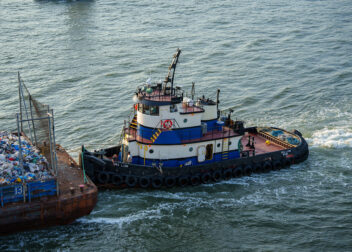
While ultra-modern drillships and high-horsepower escort tugs often capture the spotlight in marine logistics, the true heavy lifters of marine construction are far less complex. Deck barges—unpropelled, flat-bottomed rectangular vessels—serve as the foundational workhorses for the offshore infrastructure, oil and gas extraction, and civil marine engineering sectors.
Their simplicity is their greatest asset. Lacking internal propulsion systems, these vessels offer maximized surface areas, massive deadweight capacities, and unparalleled stability for transporting heavy payloads across rivers, lakes, and shallow-water offshore fields.
1. Structural Engineering and Load Distribution
Unlike cargo holds designed to contain bulk liquids or grains, a deck barge is engineered to support immense point loads directly on its deck plating.
- The Internal Matrix: Beneath the flat steel deck lies a highly reinforced network of longitudinal and transverse bulkheads. This internal cellular structure divides the barge into multiple watertight compartments, providing structural rigidity and ensuring the vessel remains buoyant even if a section of the outer hull suffers a collision breach.
- Deck Strength Rating: When chartering or purchasing a deck barge, maritime operators look closely at the deck strength rating, typically measured in tons per square meter ($t/m^2$). High-spec construction barges frequently offer ratings from $15\ t/m^2$ to over $25\ t/m^2$, allowing them to support heavy crawler cranes, massive pipe racks, and modular oilfield equipment without structural deflection.
2. Key Applications in Marine Construction
Deck barges are highly versatile assets that can be rapidly retrofitted with specialized modular equipment to perform a wide array of industrial tasks:
- Material Transport: Moving heavy, oversized structural components such as jacket legs, bridge girders, concrete piles, and large-diameter steel pipelines from coastal fabrication yards out to offshore project sites.
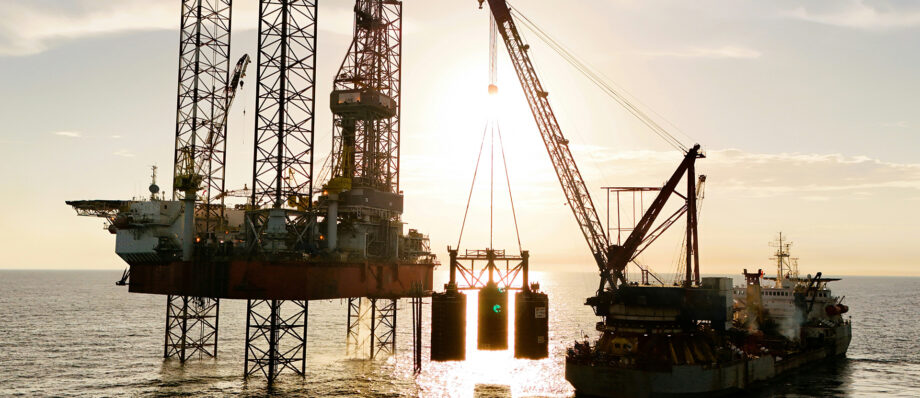
- Crane and Crane-Spud Platforms: By anchoring a high-capacity crawler crane to the deck, a standard barge transforms into a floating construction platform capable of executing pile-driving operations, harbor dredging, and marine salvage tasks.
- Pipe-Laying and Cable-Laying Support: Serving as secondary staging vessels, supplying continuous line-pipe or subsea electrical cable arrays to primary lay-vessels, thereby keeping logistical supply lines uninterrupted.
3. Operational Mechanics: Spuds, Mooring, and Ballast
Operating a flat-bottomed vessel in dynamic marine environments requires specialized stability and positioning equipment:
- Spud Systems: Many construction barges are fitted with “spuds”—heavy, vertically oriented steel pipes housed in external wells. When the barge reaches its work location, these heavy steel pins are dropped mechanically into the seabed or riverbed, securely pinning the vessel in place against strong currents and tidal swings without deploying complex anchor spreads.
- Ballast Management: To maintain an even trim and avoid dangerous list angles during heavy lifting operations, deck barges feature internal void tanks that can be selectively flooded or pumped dry using high-volume diesel ballast pumps. Proper weight distribution calculations are essential to prevent structural twisting (hogging or sagging).
4. Market Value and Longevity Factors
From an investment standpoint, deck barges represent highly durable assets with remarkably low operational overhead compared to self-propelled vessels. Because they lack complex main propulsion engines and marine gearboxes, their maintenance schedules are significantly less demanding.
When evaluating a used deck barge for purchase, buyers must prioritize ultrasonic thickness gauging (UTG) of the deck plating—which takes severe abuse from heavy equipment impacts—and conduct strict internal inspections of the void spaces to check for hidden rust, bulkhead fractures, or frame buckling.
Conclusion: Deck barges are indispensable pillars of global marine logistics and offshore construction. Their structural simplicity, combined with high deck load capacities and flexible configurations, makes them a vital, cost-effective asset class for executing the complex engineering projects that power the modern maritime and energy sectors.